Are You Actually Clean? The Truth About Toilet PaperDoes Toilet Paper Actually Keep You Clean? What You Need to Know
I always thought that all you needed to do to stay clean after using the toilet was to take a handful of toilet paper. The majority of people do. However, after looking at the real science of toilet paper hygiene, I came to the conclusion that I had been basing my actions on a number of assumptions and some of those assumptions were completely incorrect.
The article is aimed at people seeking a direct and straightforward answer to the question of whether toilet paper in fact cleans you, or if we’re all just spreading messes and referring to that as cleaning. If you’ve experienced skin irritation from using toilet paper, have wondered whether it’s worth making the switch to a bidet, or would like to know how you should clean yourself after using the toilet, then you’ve found the right one.
Here’s what I’ll walk you through:
- How toilet paper actually works on your skin — and where it falls short
- The real health risks of relying on toilet paper alone, including some things your doctor probably hasn’t mentioned
- Practical alternatives and habits that genuinely upgrade your bathroom hygiene without making it complicated
There’s no unnecessary stuff, no opinions—just straightforward information that could lead you to reconsider what “clean” really means.
Table of Contents
How Toilet Paper Actually Works on Your Skin
The Mechanics of Wiping and What It Removes
When I clean myself with toilet paper I use dry friction to pull the waste away from my skin; the method works by grabbing the solid material and lifting it off the surface. Although this seems simple, the process is in fact much messier than most people realise.
What actually gets removed:
- Visible fecal matter — the bulk of solid waste
- Some surface bacteria — but only what the paper physically contacts
- Dead skin cells — dislodged by repeated wiping pressure
Why Friction Alone Has Limitations
Dry wiping has certain limitations. There’s a limit to toilet paper hygiene since friction alone can’t dissolve or completely lift residue from skin folds, hair, or textured surfaces. It’s similar to attempting to clean a dirty pan using only a dry paper towel—what you end up doing is just moving the dirt around rather than getting rid of it.
Wiping too roughly or with excessive force also causes irritation of the skin using toilet paper, leaving the area inflamed and more susceptible to bacteria.
What Gets Left Behind After Each Use
Even after the surface has been thoroughly wiped, tiny traces will still be left behind. These traces are:
- Bacteria in faeces such as E. coli
- Residual moisture trapped in skin folds
- Odor-causing organic compounds
Which is why adequate cleaning after use usually needs more than just paper.
The Science Behind Cleanliness After Using the Toilet
The Difference Between Clean and Residue-Free
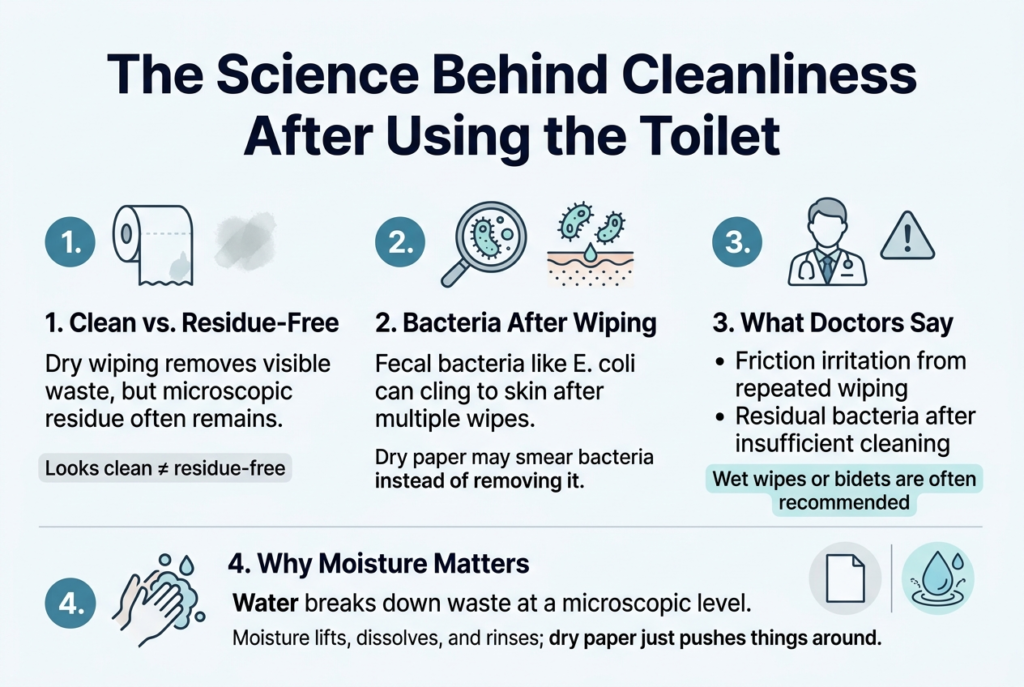
There is actually a difference between seeming clean and being truly clean; even when you wipe with toilet paper dry, any visible waste is removed but microscopic residue is almost always left behind. It’s similar to drying a plate with a dry napkin since it may look cleaner but you wouldn’t put it back in the cupboard.
How Bacteria Behave After Wiping
Bacteria such as E. coli remain on the skin even after having been wiped several times. It has been found that dry paper only spreads the bacteria rather than getting rid of them. After having settled on the skin, these microorganisms are able to move about, increase in number, and lead to infections—particularly in delicate areas.
What Dermatologists and Doctors Say About Toilet Paper
Dermatologists I’ve read consistently flag two concerns about toilet paper hygiene:
- Friction irritation from repeated wiping
- Residual bacteria left after insufficient cleaning
It is commonly suggested that wet wipes or bidets be used as better choices when it comes to achieving proper hygiene after using the toilet.
Why Moisture Matters in Effective Cleaning
It is actually the moisture that makes the difference here. Water is able to break up waste at a microscopic level in a way that dry paper cannot. Just as you wouldn’t wash your hands without water, the same reasoning holds true in this case. Moisture has the effect of lifting, dissolving and rinsing whereas paper only pushes things around.
Comparing Toilet Paper to Alternative Cleaning Methods
How Bidets Outperform Toilet Paper in Hygiene
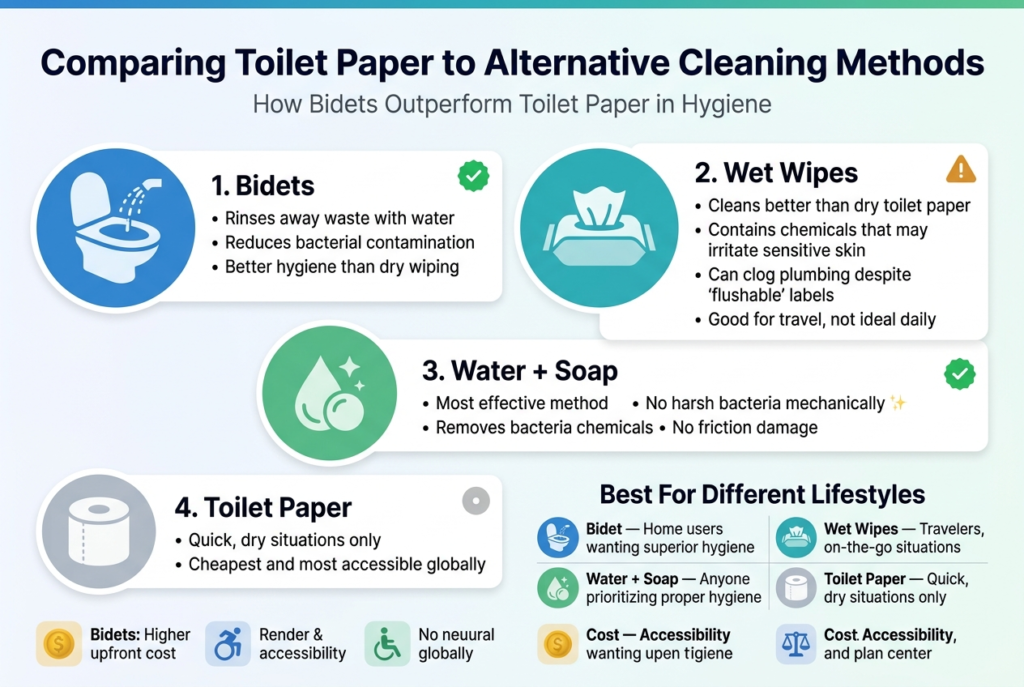
When it comes to comparing the use of toilet paper and bidets, water is the clear winner. With a bidet, waste is physically rinsed away rather than being rubbed around. Studies have shown that bidets considerably reduce bacterial contamination when compared with the use of dry wiping alone.
The Benefits of Wet Wipes and Their Drawbacks
Wet wipes do have the advantage of being a solid substitute for toilet paper and, in fact, clean more effectively than dry paper. That said, there is a problem — the majority of them contain chemicals which can irritate sensitive skin and still manage to clog the plumbing even though they are labelled as flushable. They’re excellent for use when travelling but aren’t suitable for everyday use.
Why Water and Soap Remain the Gold Standard
Water mixed with a little soap is actually the best method for properly cleaning after using the toilet since it gets rid of bacteria by mechanical means without the need for strong chemicals or causing friction damage.
Which Method Suits Different Lifestyles and Needs
| Bidet | Home users wanting superior hygiene |
| Wet Wipes | Travelers, on-the-go situations |
| Water + Soap | Anyone prioritizing proper hygiene after using the toilet |
| Toilet Paper | Quick, dry situations only |
Cost and Accessibility Factors Worth Considering
- Bidets: Higher upfront cost, cheaper long-term
- Wet wipes: Affordable but recurring expense
- Toilet paper: Cheapest and most accessible globally
- For water and soap: almost free, just requiring some basic plumbing.
Health Risks Linked to Relying Solely on Toilet Paper
Skin Irritation and Micro-Tears You Might Not Notice
Over time, rough or strongly scented toilet paper can cause damage to delicate skin. I’ve noticed that when skin is wiped repeatedly, small micro-tears form, allowing bacteria to get through and leading to redness, itching, and inflammation. Even toilet paper described as soft usually contains dyes and chemicals that can irritate skin, especially for people with sensitive skin or conditions such as eczema.
How Poor Wiping Habits Lead to Infections
When considering the health risks associated with using toilet paper, the problem of incomplete cleaning becomes obvious right away. The fecal matter that remains after wiping provides a habitat for harmful bacteria such as E. coli. This in turn increases the risk of:
- Urinary tract infections (UTIs), particularly in women
- Bacterial vaginosis from improper front-to-back technique
- Perianal skin infections from chronic moisture and bacterial buildup
Actually, properly cleaning the toilet after use will truly lower these risks.
The Connection Between Toilet Paper and Hemorrhoid Discomfort
Aggressive wiping is one of the most neglected causes of hemorrhoid outbreaks. Whenever you have hemorrhoids, I always advise you to avoid using dry and coarse paper since the constant rubbing makes the swelling worse, leads to bleeding, and delays healing. Making the switch to milder alternatives can result in a noticeable improvement almost right away.
Choosing the Right Toilet Paper for Better Hygiene
Understanding Ply Count and Its Effect on Cleaning
When it comes to choosing toilet paper, the number of plies is more important than most people think. Here’s a brief overview:
| 1-ply | Minimal | Low |
| 2-ply | Moderate | Medium |
| 3-ply | Better | High |
I always advise going for 2-ply or an equivalent grade if you want true improvements in toilet paper hygiene since thinner kinds usually need more sheets and yet still leave residue.
Buy our latest soft 3-ply toilet paper
Why Texture and Softness Impact Skin Health
Because rough textures cause micro-abrasions on sensitive skin, prolonged use of toilet paper can result in skin irritation. When choosing toilet paper I look for varieties marked ‘ultra-soft’ without compromising their absorbency. Softness offers more than just a comfortable feel; it provides real skin protection.
The Role of Fragrance-Free and Chemical-Free Options
Fragrance-added toilet paper may have a pleasant smell but can contain substances that disturb the skin’s natural balance. When it comes to my preferred choices, I always look for paper that is free from fragrance, free from dye, and hypoallergenic — a choice that is particularly important for people who have sensitive skin or suffer from recurrent irritation.
How Recycled and Bamboo Varieties Compare to Regular Brands
- Bamboo: Naturally soft, antibacterial, and eco-friendly
- Recycled: Eco-conscious but sometimes rougher in texture
- Standard: Although it is widely available, it often contains bleaching chemicals.
I would rather choose bamboo since it provides both hygiene and sustainability without sacrificing skin comfort.
Simple Habits That Genuinely Improve Your Hygiene Routine
The Correct Wiping Technique Most People Get Wrong
People usually clean from front to back without giving it much consideration, but I find that this thing goes wrong frequently. The method I adhere to is as follows:
- You must wipe from front to back—wiping in the opposite direction would pull bacteria towards the urethra.
- Instead use a gentle blotting pressure rather than aggressive scrubbing since the latter causes micro-tears and irritation.
- Instead bundle the paper by folding it since folding produces a neater and more manageable surface.
- After each wipe, check the paper and continue only when it is once again clean.
It is at this stage that most people rush themselves and as a result compromise their toilet paper hygiene.
When to Consider Adding a Bidet to Your Bathroom
I’d recommend a bidet if you experience any of these:
- Frequent toilet paper skin irritation or redness
- Hemorrhoids or sensitive skin conditions
- Desire to genuinely improve proper hygiene after using the toilet
Bidet attachments for entry-level models cost less than $40 and are suitable for most standard toilets—there’s no need for any major renovations.
How to Combine Methods for Optimal Cleanliness
My preferred routine blends both approaches for optimal cleanliness:
| Bidet rinse | Removes residue with water |
| Toilet paper pat-dry | Eliminates excess moisture |
Water has the property of cleaning and paper of drying; together they are more effective than when used separately.
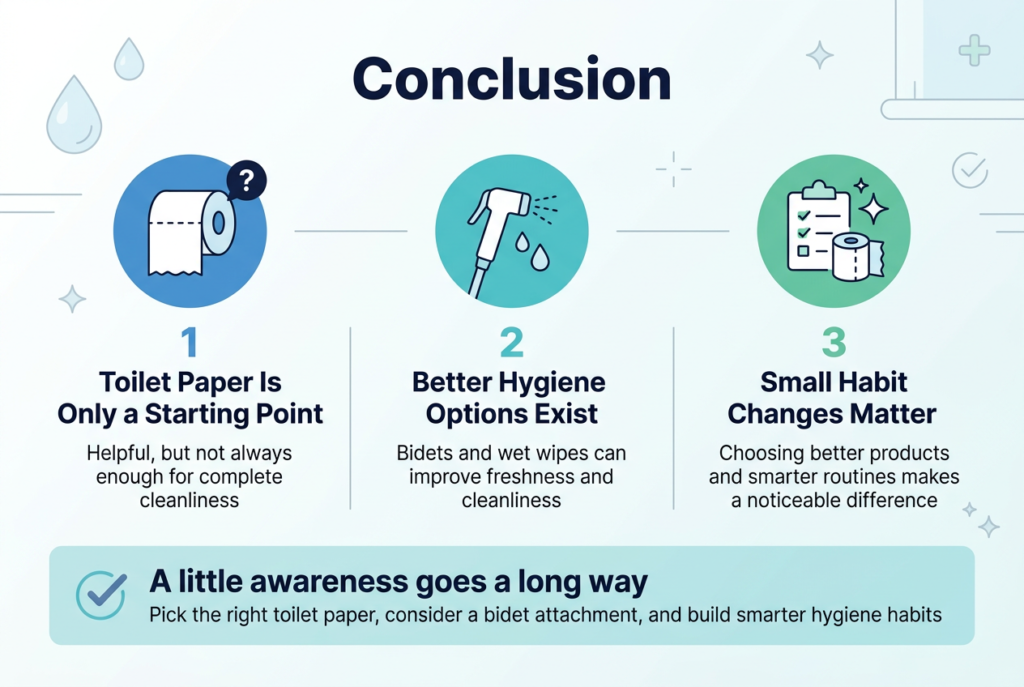
For so long has toilet paper been a standard item in bathrooms that we generally never take the time to consider whether it really does its job. However, after looking into how it affects the skin, what science has to say about true cleanliness, and the health dangers of depending on it alone, it becomes obvious that toilet paper is merely the first step rather than a full solution. Options such as bidets and wet wipes can raise the standard of hygiene considerably, and even minor changes to our habits can lead to a noticeable improvement in how clean and comfortable I feel each day.
My big takeaway here is that I don’t have to overhaul my entire bathroom routine overnight, but being a little more intentional goes a long way. Picking the right toilet paper, considering a simple upgrade like a bidet attachment, and building a few smarter habits can genuinely improve my hygiene without much effort. It’s one of those areas where a little awareness pays off more than I’d expect.